Shopping Online shopping has wholly transformed the manner in which customers discover, assess, and make purchase decisions about products and their prices. With only a few clicks, customers are able to see thousands of offers and discounts flashing before their eyes on online marketing and e-commerce portals. Whether it be their daily and basic requirements, fashion items, electronics, or appliance products, online shopping is the one-stop solution for customers to save money and time.
Despite this convenience, however, there are also challenges that come with online shopping. Behind the push to immediately get the “best deal,” consumers tend to overlook the basic process of verifying the offer, thereby ending up with impulse buys, deceptive discounts, or mere hyped-up items that fail to live up to customer expectations. The use of discount notices, countdown clocks, or statements like “lowest price ever” can be a very effective trigger for online shopping activities. Learning how all these work, as well as how to personally verify these deals before clicking the purchase button, can be a game-changer.
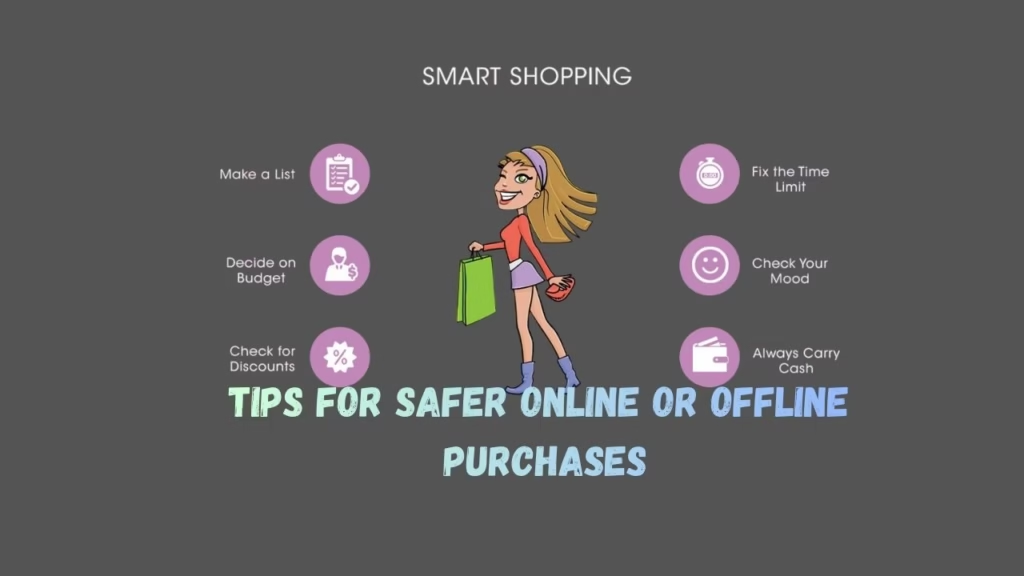
Original vs Current Price to be Checked before Shopping
One of the most common practices in online selling is the practice of exaggerating the original price. This is done when the seller is about to sell an item and exaggerates the ‘MRP’ so that the discount appears more substantial.
Before purchasing:
- Verify the listed MRP with the prices available on other websites.
- Check whether the product could be bought earlier at a similar or lower price.
- Don’t fall for “80% OFF” without questioning.
If the discount seems too good to be true, it probably is worth another glance.
Employ Price History & Comparison Tools
Price history tools are one of the most dependable methods to ensure that the deal is legitimate. It measures how long the price has been at that level and provides information about similar sold items.
Simple Price-Checking Methods
| Methods | How to verify it |
|---|---|
| Price history trackers | Whether the price is actually cut |
| Cross Comparison of Platforms | When it is Exclusive or Common |
| Manual Google search | Alternative sellers & pricing |
| Wishlist tracking | Price drop patterns over time |
When the “sale price” is a close estimate of the market price, the reduction in price is merely a ploy.
Read Reviews Beyond Star Ratings
High stars may not always ensure quality. Some people often end up relying only on the stars without even bothering to check the comments left by customers.

What to check in reviews:
- Recent reviews (last 1–3 months).
- These “verified purchase” tags.
- Repeated grievances about the same thing.
- Real user photos & videos.
Be wary of products with reviews that:
- Are too generic.
- Appear Copied or repetitive.
- Do Not Meet the Product Description.
An honest review will often point out both the positives and negative aspects of a product. This is what makes it a honest review.
Seller & Return Policy Verification
Trusted sites notwithstanding, the role of the seller cannot be overemphasized, much like the item being sold. Several sellers are able to sell one item at varied prices and quality.
Before purchasing:
- Research the seller’s feedback and rating.
- Check return, replacement, and refund policies.
- Carefully read the fine print on “No Return” or “Exchange Only” merchandise.
For the items for sale, the return policy can also be more rigid, especially during large events. It is always good to check this before making any purchase.
Don’t Follow Urgency Triggers Blindly
Phrases such as:
- “Only 2 left in the stock”.
- “Deal ends in 10 minutes”.
- “100+ people viewing this”
Are aim to instil panic-buying behaviour in shoppers. Although limited-period offers exist, the countdown mechanics in many urgency triggers have long ceased to exist.
A smart approach:
- Take a step back and check your product again.
- Find the same offer later.
- Verify the reset of the countdown.
Good deals are not sold out in an instant, and acting too quickly can lead to regrets.
Bonus Tips For Safer Online Purchases
- Do not click on unknown deal links in random messages and/or comments.
- Prefer secure payment options (cards, UPI with consumer protection).
- Screenshot the order details and invoices.
- Be wary of new sellers with highly discounted prices.
If a deal asks you to “act now or lose everything,” that’s a sign to take heel, not yearn for a head start.
Final Conclusion : Smart Buying Is Better Than Fast Buying
Checking online deals before purchasing is not about missing out—it’s about making informed buying decisions. A bit of legwork and patience goes a long way in ensuring that you get actual value for your buck while avoiding rip-off deals.
Online shopping favours the cautious and well-informed buyer, not the impulsive one. Next time you notice an amazing bargain, check it out, then decide. And that’s how smart online consumers save, without regrets.
For More Information You Can Visit our Page
Frequently Asked Questions (FAQs)
How would I know if the discount online is legitimate?
Compare prices between different platforms and check the price history to buy.
Are countdown timers and low-stock alerts always real?
No, many are automated urgency triggers designed to make people buy on impulse.
Can one only rely on a high-star rating?
No. Always check for recent valid reviews and hunt down authentic user experiences.
Why should I review seller details before purchasing?
Because seller reliability influences product quality, returns, and refunds.