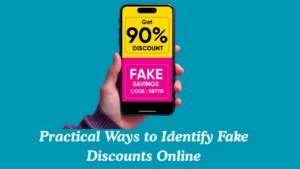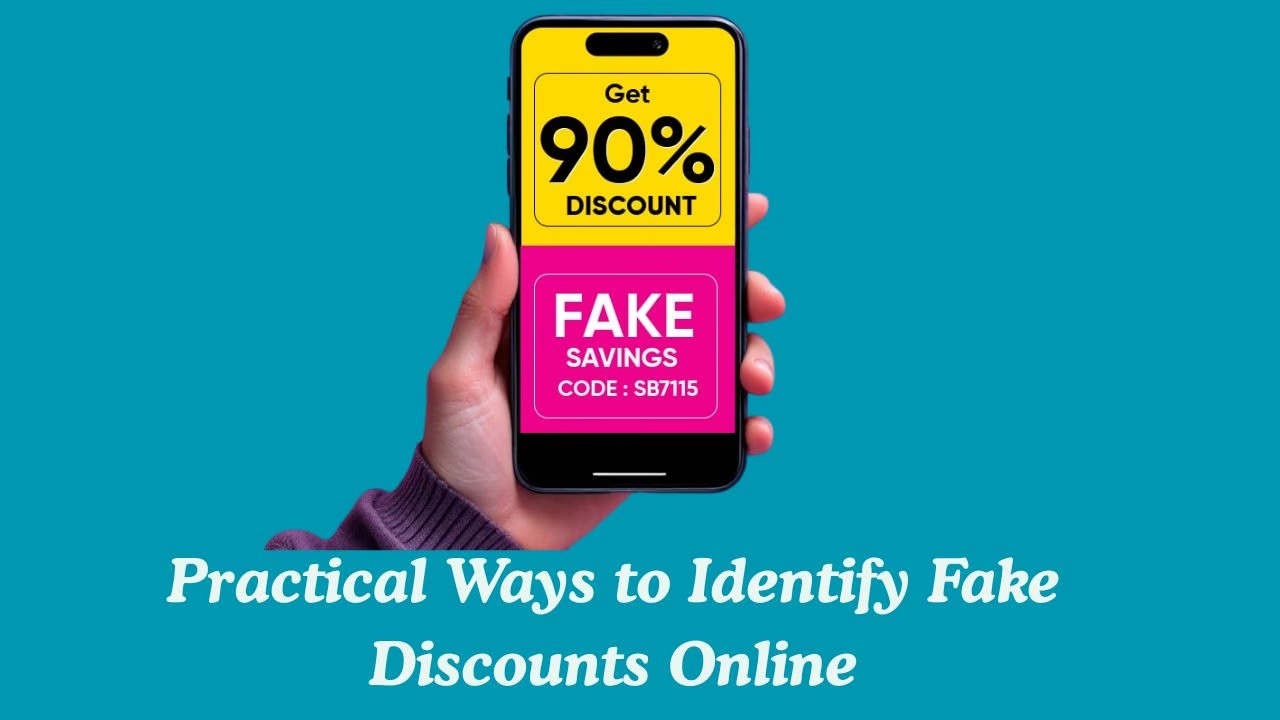
Fake Discounts while online shopping, life has never been easier. But with this increased comfort comes a host of deceptive marketing practices that online shoppers have to deal with. One such deceptive practice is fake discounts. Many online shopping sites and sellers are using various price manipulation techniques to lure customers with seemingly attractive offers that are actually not. Therefore, it is extremely important that as a smart shopper, you learn to identify such deceptive practices so that you do not end up overspending under the illusion of saving money.
In this article, we will discuss 10 practical ways that can help you identify fake discounts online.
Compare Prices Across Multiple Websites
One of the easiest and most effective ways to identify fake discounts is to compare prices across multiple websites. In this context, it is quite common for online sellers to inflate the original price of a product (also known as MRP) and offer a discount on that inflated price.
When you check the price of a product on multiple websites, you will find that the discounted price is actually the market price.
Check Price History Tools
Price history tools are very effective in detecting fake discounts. Price history tools provide information regarding the history of the price of a particular product.
- If the price goes up and then comes back down, then it is a fake discount.
- If the price has been constant over time, then it is a genuine discount.
These tools can save you from falling prey to fake discounts during festive or flash sales.
Beware of “Up to 80% Off” Claims
The term “up to 80% off” is very deceptive. The term “up to” attracts the attention of potential buyers, but in reality, only a few products are available at a discounted rate, mostly low-demand or old items.
Most of the high-demand or in-demand items are available at a very low discount. This technique is used to lure buyers, but in reality, only a few items are available at a high discount.
Analyze the Seller’s Pricing Strategy
Not all sellers use ethical pricing practices. Some sellers set high base prices and then offer discounts to mislead the customer into thinking that the product is being sold at a discount but it is fake discounts.
You should also observe if the seller is showing high discounts on all their products. If everything seems discounted all the time, it is a clear indicator of unethical practices.
Look for Seasonal Price Manipulation
Some online sellers hike the prices of their products before the onset of a sale event such as Diwali, Black Friday, New Year sales, etc. They then offer a discount on the product to bring it back to the original price.

This way, the customer ends up paying the original price for the product, which is not the actual discount. You should observe the price trends to identify this tactic.
Check Product Reviews and Ratings
Customer reviews may give you a fair idea of whether the discount is genuine or false. At times, customers may complain that even after a discount, the product is overpriced.
- Check for reviews on price and value for money.
- Be careful when you find too many customers complaining about high prices.
Reviews give you a real-life perspective, unlike what is offered by the seller.
Understanding the Difference Between MRP and Selling Price
Most customers think that MRP stands for the actual selling price, but in reality, products are not usually sold at the MRP, at least not online.
Here’s a quick comparison to understand the difference:
| Factor | MRP (Maximum Retail Price) | Actual Selling Price |
|---|---|---|
| Defined by | Manufacturer | Seller/Merchant Demand |
| Usage | Legal Maximum Price | Actual Selling Price |
| Discount Relevance | Usually inflated for marketing | Actual Value for Money |
| Customer Relevance | Looks Expensive | Realistic Price |
Understanding the difference between the two will help you not fall prey to the actual discounts offered.
Watch Out for Fake Countdown Timers
Most websites display a countdown timer saying “Only 2 Hours Left!” or something similar. But the funny part is that the countdown starts again every time you go back to the page.
This psychological trick makes the customer buy the product impulsively without thinking about the actual genuineness of the discount offered.
Evaluate Bundle Deals Carefully
Bundle deals such as “Buy 2 Get 1 Free” or “Combo Deals” may be a trick by the seller to increase the price of the items in the bundle so that it looks like a great bargain.
Before making the purchase, it is also a good idea to determine the cost of the item individually and compare it with the cost of the items in the discount package.
Check for Hidden Costs
While your discount may be real, there are chances that there might be hidden costs such as shipping, taxes, and handling charges. These can totally negate your discount.
Always look for the final checkout prices before making your purchase. The discount you thought was good may not be so good after all.

Final Thoughts
Fake discounts are one of the tricks in the bag for the world of online shopping. They try to influence your purchasing decisions through various psychological triggers. But by being aware of these tricks and by using the practical tips provided in the above article, you can avoid falling prey to such tricks.
Being smart is not just knowing how to get the best prices. It is also knowing how to understand value for money. Over time, these practices will not only save you money, but you will also be able to make smart purchasing decisions.
For More Information You Can Visit our Page
Frequently Asked Questions (FAQs)
What is meant by fake discounts in online shopping?
Fake discounts are false discounts achieved by increasing the actual price.
How do I ensure that I am not missing out on any genuine discounts?
You can compare prices across websites.
Why do websites come up with “up to 80% off” kind of offers?
It is just a marketing strategy; only some products are discounted by such a high margin.
Are price history tools reliable for checking prices?
Yes, they do show real-time trends.
What is meant by MRP and actual selling price?
MRP stands for maximum retail price; actual selling price is the real price.
How do fake countdown timers trick customers?
Fake countdown timers trick customers by creating false urgency.