An Entirely New Way of Experiencing Gaming
ROG XReal R1 with Stunning 240Hz Wearable displays are slowly been progressing beyond the novelty stage, and during CES 2026 event, ASUS has made a daring move into this kind area. By merging high refresh rates with low latency and spatial computing, ASUS is promoting AR glasses as an alternative to gaming displays for PCs, consoles, and handheld gaming devices.
Introduction: ASUS has finally decided to enter the AR gaming space with high refresh
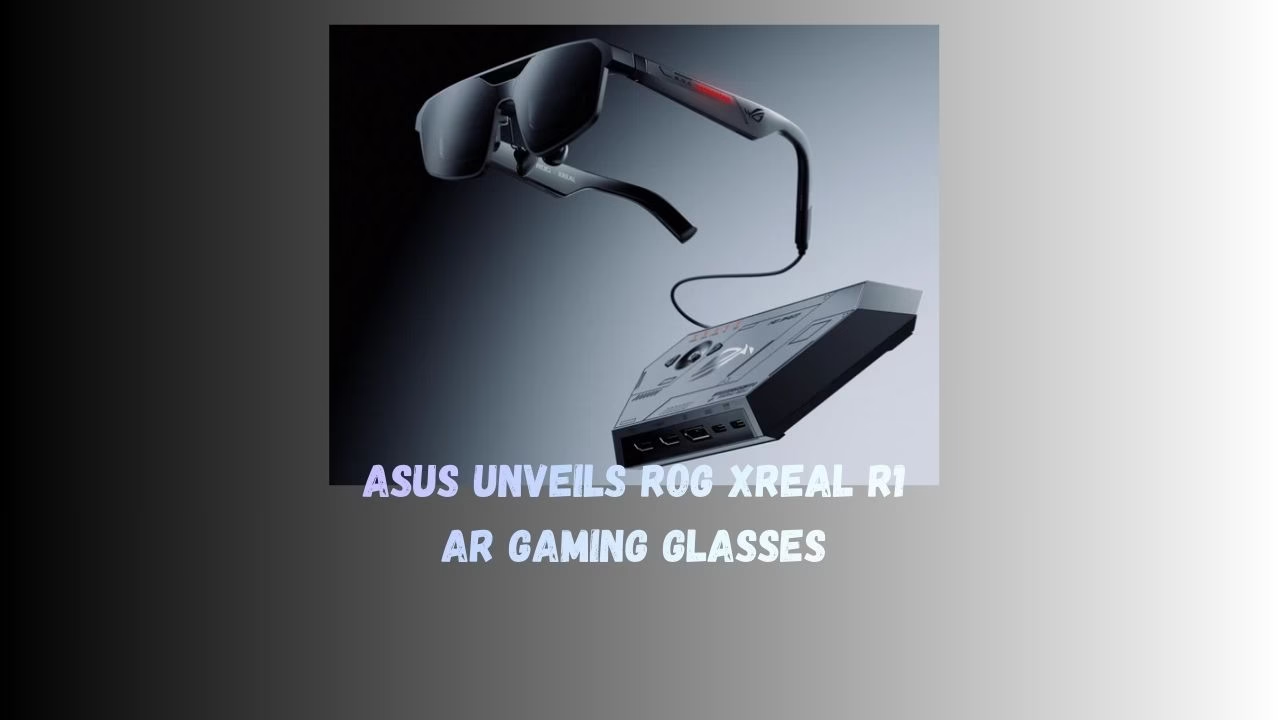
Unveiled at the CES 2026 event, ASUS has showcased the ROG XReal R1 AR gaming glasses developed in collaboration with XReal. According to ASUS, the product is the first in the world’s wearable micro-OLED display supporting speeds of up to 240Hz, designed with gaming in mind.
The ROG XReal R1 is a product that is positioned to provide a large virtual screen experience without the use of a conventional monitor or a television. These products are mainly targeting gamers that want to enjoy portable convenience and performance. In this particular product launch, it is almost on the heels of XReal’s launch of their XReal 1S AR glasses, which mark a new era for high-performance wearables.
What’s so special about the ROG XReal R1?
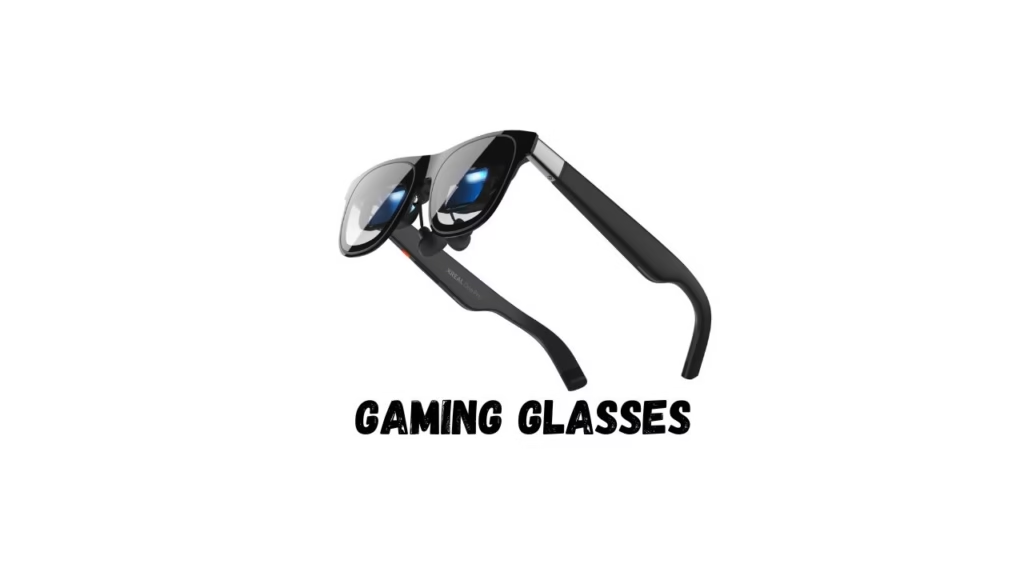
What differentiates the ROG XReal R1 is that it particularly focuses on gaming-grade performance. While the important-share AR glasses pitch for productivity or media consumption, ASUS has tuned this device around refresh rate, latency, and compatibility with gaming platforms.
The ROG XReal R1 uses, at its core, a Sony 0.55-inch micro-OLED panel with Full HD resolution and a high refresh rate up to 240Hz. This allows for smoother motion and lesser blur-a very critical aspect of fast-paced games such as shooters or racing titles.
It states that ASUS claims the glasses project a virtual screen of up to 171 inches, at perceived distances of about four meters. The field of view is rated at 57 degrees, covers approximately 95% of the focused viewing area, and provides an immersive gaming environment in a compact, wearable form.
Spatial Display & Tracking Capabilities
One of the strong points of ROG XReal R1 is its spatial display features. Native support for 3DoF tracking gives glasses owners two main modes of viewing:
- Anchored mode: the virtual screen remains fixed in space.
- Follow mode: screen moves with the user’s head.
This flexibility would let gamers tailor the experience based on comfort and use case-whether seated at a desk or playing on a couch.
The onboard X1 chip manages the spatial positioning and screen scaling, maintaining consistent alignment and smooth motion tracking during gameplay.

Connectivity & Platform Compatibility
ASUS has focused a lot on making the ROG XReal R1 plug-and-play friendly. As for handheld gaming, a single USB-C connection should be enough to hook them directly to the ROG Ally and enable instant use without the need for additional adapters.
ASUS provides for PCs and consoles the ROG Control Dock. The docking solution serves as the interface connecting the conventional gaming components with the AR glasses, having:
- Dual HDMI 2.0 ports.
- One DisplayPort 1.4 port.
- USB-C Output to the Glasses.
The dock can support up to 4K graphics at a rate of 60Hz for input, which is further processed for display via the glasses.
Performance, Latency, and Visual Comfort
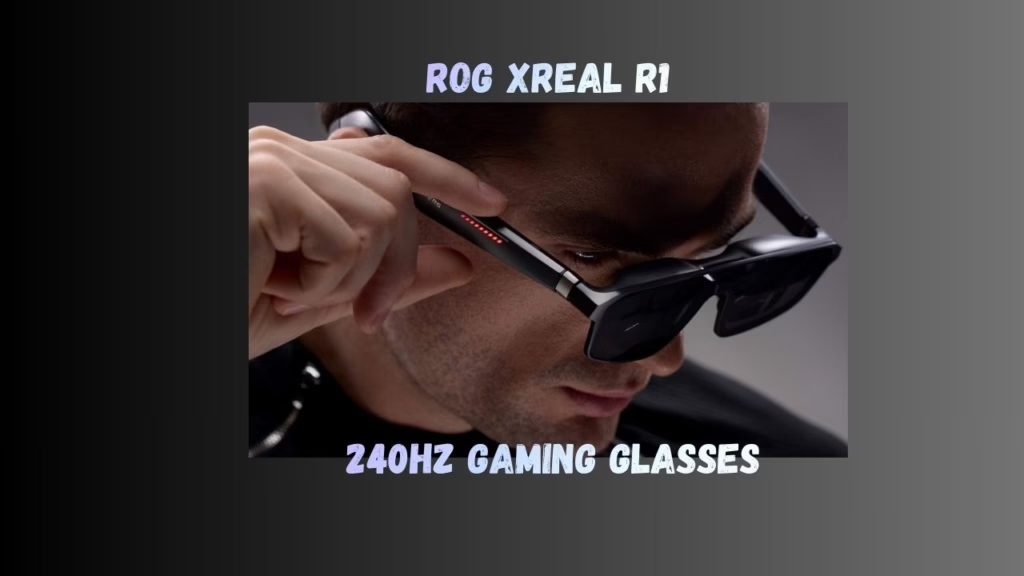
Gaming performance is not just related to the refresh rate; it is also related to the latency of the monitor. The company claims that the ROG XReal R1 has the motion-to-photon latency of 2-3ms.
The brightness level is 700 nits; hence the display is usable under varied lighting conditions. For the purpose of enhancing comfort when using the glasses, the device comes with electrochromic lenses that have three levels of transparency that can be adjusted manually.
Audio Experience: Sound by Bose
Audio is handled via Sound by Bose, a tuning collaboration that works to enhance spatial awareness for gaming. Instead of relying on headphones, the glasses integrate the audio internally, which helps users stay in situational awareness while still offering immersive sound.
This is consistent with the philosophy behind the ROG XReal R1-it’s a wearable, no-extra-accessory gaming display.
Design, Weight & Portability
The ROG XReal R1 weighs 91 grams, which keeps it light and comfortable to wear for extended periods. The ROG Control Dock weighs 230 grams, making the whole setup portable enough for travelling or LAN-style gaming sessions.
It allows gamers to take an enormous virtual screen with them in a small bag, which is quite impossible with a typical monitor.
Comparison To Similar Products: XReal 1S vs ROG XReal R1
Only days before CES 2026, XReal introduced its XReal 1S AR glasses, which are designed for the masses. Though it has 120Hz, 52-degree field of view, and extend display scaling capabilities, ROG XReal R1 AR Glasses are more geared towards higher refresh rates and are game-optimized.

The ROG variant:
- 240Hz Refresh Rate.
- Lower latency.
- Gaming-centric connectivity.
On the other hand, the XReal 1S gives priority to productivity-related features, flexibility of the display, and comfort for the eyes.
Specifications Summary (Rog XReal R1)
| Feature | Details |
|---|---|
| Display | 0.55-inch Sony micro-OLED |
| Resolution | Full HD |
| Audio | Sound by Bose |
| Refresh Rate | Up to 240Hz |
| Field of View | 57 degrees |
| Size of Virtual Screen | Up to 171 inches |
| Tracking | Inactive 3DoF |
| Latency | ~2–3ms |
| Brightness | 700 nits |
| Connectivity | USB-C, HDMI 2.0, DisplayPort 1.4 (via dock) |
| Weight | Glasses: 91g, Dock: 230g |
Pricing and Availability: What We All Know So Far
At present, there are no details available on the pricing and availability of the ASUS ROG XReal R1 AR gaming glasses. Based on the display technology that it incorporates in the product, the device is likely targeted at gaming enthusiasts.
Final Verdict: A Glimpse into the Future of Gaming Monitors
The ASUS ROG XReal R1 is a major leap for gaming displays with AR capabilities. With its 240Hz micro-OLED display, ultra-low latency features, spatial tracking capabilities, and the ability to support multiple platforms, the ASUS ROG XReal R1 is setting the new standard for what wearable gaming technology can provide to its users.
Even if price is what will make it accessible, there’s no doubt that the ROG XReal R1 indicates that AR glasses have graduated from being prototype gadgets to being legitimate substitutes for traditional gaming displays in the gaming world.
For more Gadgets you can visit:-
Frequently Asked Questions (FAQs)
In what ways is the ROG XReal R1 different from other AR glasses?
For its 240Hz micro-OLED display, it is specifically optimized for gaming due to the ultra-low latency.
Is the ROG XReal R1 compatible with consoles and PCs?
Yes, it does, with support for PCs and consoles using the ROG Control Dock and direct connectivity to the ROG Ally.
Does the ROG XReal R1 replace a gaming monitor?
For many users, this can provide a huge virtual screen experience without having a physical display.
Is the ROG XReal R1 comfortable for long gaming sessions?
Yes, its lightweight design and adjustable electrochromic lenses are built for extended use.